|
October 17, 2004
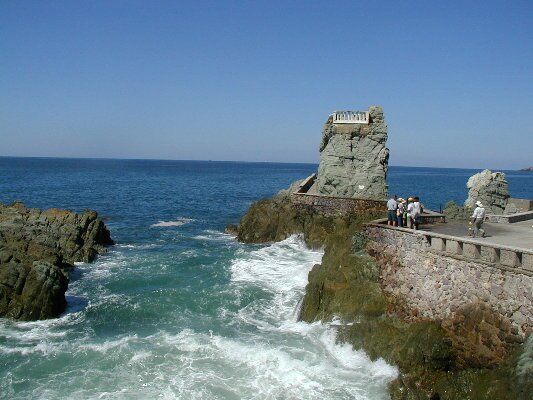
Leaving Mazatlan this morning, we decided to drive the coastal route all the way around the city. Mazatlan has the longest "city beach" in the world, 16 km (10 mi). Just before we reached Playa Olas Atlas, we were fortunate to witness a "clavadista" cliff diver, making his descent off the side of a platform built atop a large rock. This was a very exciting event as the divers come very close to the rocks at the bottom before safely entering the water.
After leaving the city limits, we turned northeast onto the road to Durango. We wanted to visit the town of Concordia which was founded in 1565 and famous for its beautiful furniture and pottery. The drive to the town was gorgeous. There were many wildflowers blooming in all colors. In addition, on the higher slopes, the deciduous trees were changing colors. Once in Concordia, we visited the 18th century church and had some interesting experiences driving down the narrow streets only to find dead ends and overhanging tree branches that the expedition vehicle wouldn’t fit under. We spent a few minutes backing up and turning around, all the while entertaining the locals. On the way back to the main highway, we stopped to purchase some "pepinos" (cucumbers) from a local couple selling them on the side of the road. The senora offered to "spice" them for us, but as wanted to have them for salads etc., we declined.
We continued down the road toward Teacapan. Teacapan is at the mouth of an estuary and has become very popular with tourists. It is known as a great place to fish, but we hoped to find a spot to launch the kayak and see the birds. What we found along the way were lots of dredged and bulldozed lagoons. It looked like a failed experiment at fish or shrimp farming. The beaches close to Teacapan were pretty and we were able to find a nice spot to camp, but we were unable to find anyplace to launch the kayak.
October 18, 2004
Because we are in the land of lagoons, we are seeing a lot of different types of birds. This morning we saw two different types of doves, western kingbirds, lots of egrets and herons, an osprey, a black hawk and of course the ever present grackles and vultures. We also very fortunate to see an iguana.
As we traveled back along the road to the main highway, we saw many farmers plowing their fields, getting ready for the fall planting. Many of the farmers were using horse-drawn, hand held plows. Also along the road we saw people selling whatever their local specialties were. They stand close to the "topes" (speed bumps, also known as sleeping policemen) because they know the drivers have to slow down. And we have seen many sales take place in the middle of the road. Today we saw dried shrimp and tamales being sold at the topes.
After driving through the town of Tecuala (with its cobblestoned streets) we think we have found a good spot to kayak. We’ll check it out tomorrow.
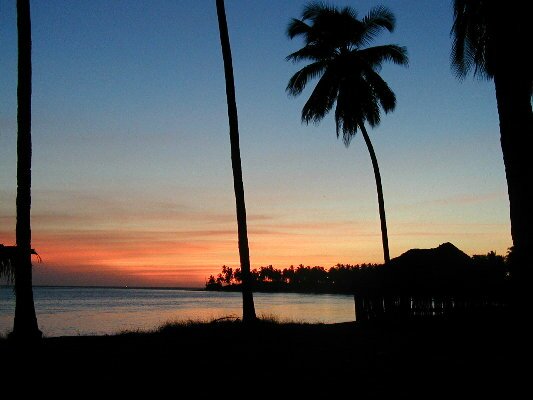
We made camp in a coconut grove at the edge of the beach at Playas Novillero. This is a really nice, undeveloped spot that is home to the longest beach in Mexico – 82 km long. The sand is so hard packed that we can drive the expedition vehicle on the sand. It was almost comical to see the local buses (retired school buses) pass by us using the beach as a roadway.
|